2025

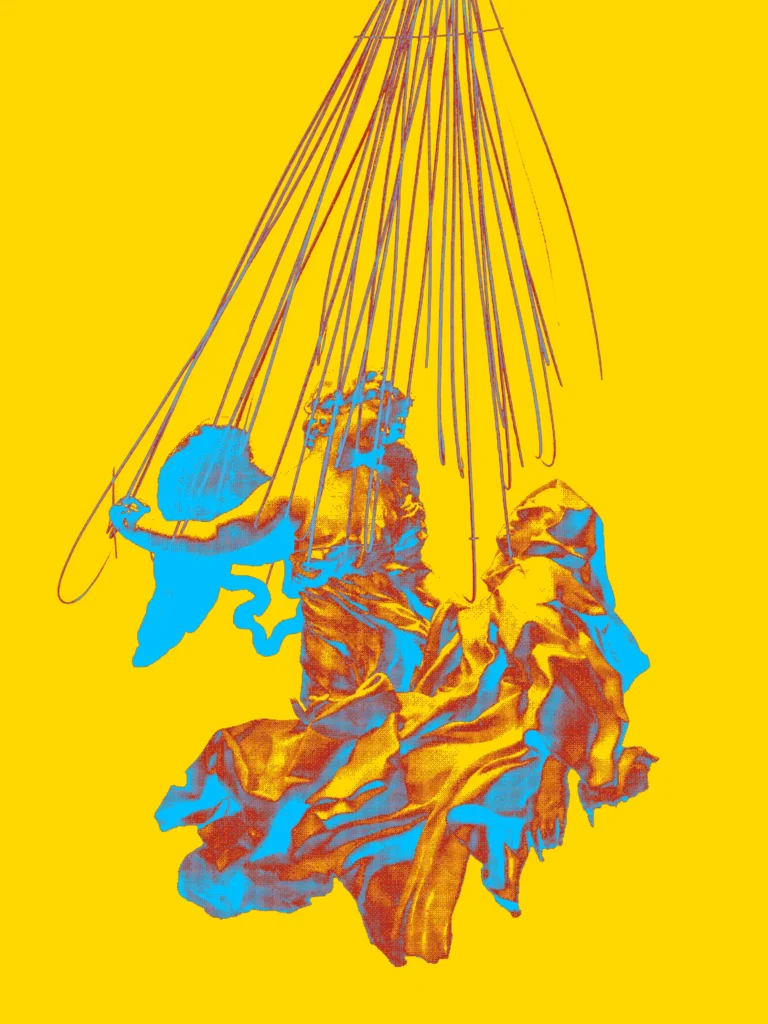
The Ecstasy of Saint Teresa is one of the most iconic sculptures of the Baroque, created by Gian Lorenzo Bernini in the 17th century. It depicts Saint Teresa of Ávila in a moment of deep spiritual revelation, inspired by her own mystical visions. In her account, the saint describes how an angel pierced her heart with a fiery spear, plunging her into a state of ecstasy where pain and divine joy merged. Bernini’s sculpture captures that instant with an expressiveness that has sparked many interpretations, several of them pointing to a pleasure that goes beyond the strictly religious.
From spiritual ecstasy to human pleasure
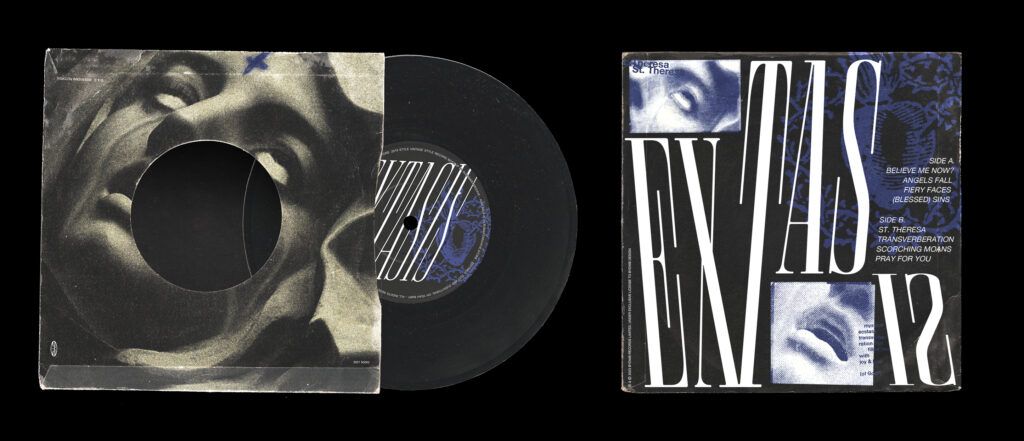
EXTASIS is a personal album artwork project that starts from this duality between spiritual and carnal ecstasy, but takes it in the opposite direction to the religious reading. The cover of this fictional album transforms Saint Teresa’s experience into a depiction of human pleasure in its purest form. The angel is left out of the frame, and the focus shifts to the intensity of the feeling itself, stripped of any mystical or heavenly connotation.

Sacred and profane
Visually, the design plays with the contrast between the sacred and the profane, reinterpreting religious iconography with a contemporary aesthetic. Fragments of Bernini’s sculpture (the eyes, the parted lips) are treated with a halftone effect in deep blue and black, alongside a vintage engraving of a heart crowned with thorns and pierced by an arrow, a nod to Saint Teresa’s transverberation. The title, set in a high-contrast condensed serif, stretches, breaks and flips across the cover, while worn paper textures give the piece the feel of an old record. Even the tracklist joins the game, with titles like Transverberation, Scorching Moans or (Blessed) Sins that blur the line between prayer and desire.


The project includes the album cover, the back cover with the tracklist, the inner sleeve and the vinyl record label.

Resignifying religious symbols
More than a graphic design exercise, EXTASIS is a reflection on how art can give new meaning to religious symbols and turn them into new narratives: a reinterpretation of ecstasy rooted in the earthly, the human and the visceral.